
Technical Specifications
| Polymer Type | PETP / PET-P (Polyethylene Terephthalate) |
| Density | ~1.38 g/cm³ |
| Water Absorption (24h @ 23°C) | ~0.2% |
| Tensile Strength | 55–75 MPa |
| Tensile Modulus | 2.8–3.2 GPa |
| Flexural Strength | 90–110 MPa |
| Elongation at Break | 10–25% |
| Continuous Service Temp | -20°C to +110°C |
| Melting Point | ~255°C |
| Coefficient of Friction | ~0.25 |
| UV Resistance | Fair |
| Weather Resistance | Fair |
| Chemical Resistance | Excellent to acids, oils, fuels |
| Wear Resistance | Very good |
PETP Rod
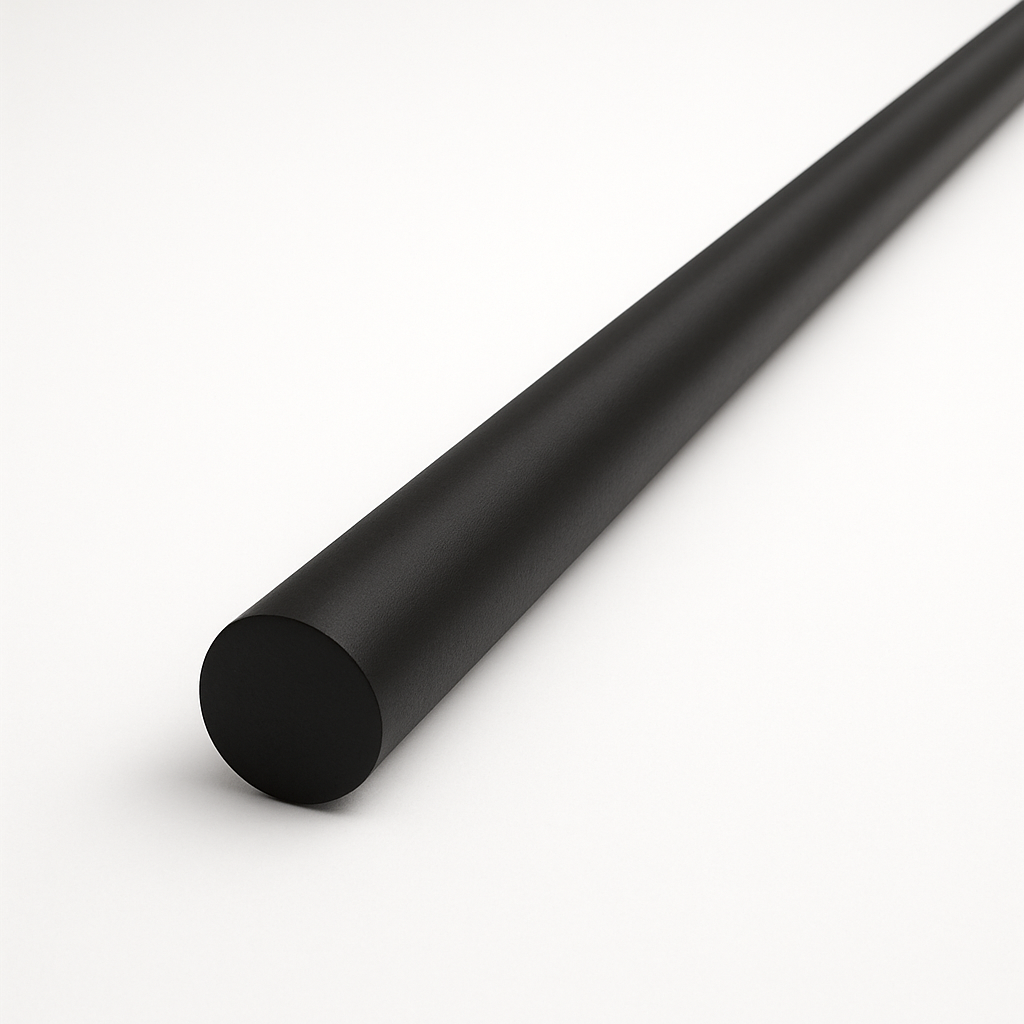
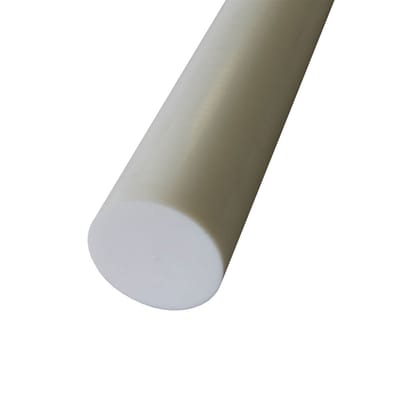
PETP rods, 1000 mm long and available in diameters from 20 mm to 150 mm, are precision-engineered for high mechanical performance. Made from polyethylene terephthalate, they feature:
Per-piece pricing for off-the-shelf lengths. Need a custom cut or a shorter length? Email us a quote.
Why choose PETP Rod?
- High rigidity and dimensional stability
- Excellent wear and abrasion resistance
- Low moisture absorption
- Good sliding properties
- Suitable for food contact (FDA compliant grades available)
PETP Rod – Dimensionally Stable & Wear-Resistant
PETP (Polyethylene Terephthalate) Rod is a strong, stiff engineering plastic known for its excellent dimensional stability, low moisture absorption, and superb wear resistance. Ideal for high-precision components, PETP is often used for bearings, wear pads, gears, and insulators.
With a low coefficient of friction and good chemical resistance, it performs well in both dry and lubricated environments, making it suitable for food-grade and industrial applications.
Key Features:
Available in a range of diameters for machining high-performance, close-tolerance parts.
Ready to order your PETP Rod?
Cut to size, precision finished and dispatched Australia-wide. Not sure which material suits your job? We'll help you choose the right one.
Related Products
Technical Specifications
| Polymer Type | PETP / PET-P (Polyethylene Terephthalate) |
| Density | ~1.38 g/cm³ |
| Water Absorption (24h @ 23°C) | ~0.2% |
| Tensile Strength | 55–75 MPa |
| Tensile Modulus | 2.8–3.2 GPa |
| Flexural Strength | 90–110 MPa |
| Elongation at Break | 10–25% |
| Continuous Service Temp | -20°C to +110°C |
| Melting Point | ~255°C |
| Coefficient of Friction | ~0.25 |
| UV Resistance | Fair |
| Weather Resistance | Fair |
| Chemical Resistance | Excellent to acids, oils, fuels |
| Wear Resistance | Very good |
Frequently Asked Questions
What is PETP rod used for?
What are the key properties of PETP rod?
How does PETP rod compare to nylon or acetal?
Can PETP rod be machined?
Is PETP rod suitable for food contact applications?
Is PETP rod equivalent to Ertalyte?
Need this custom cut or fabricated?
Send us your drawing (DXF, DWG, PDF, EPS, STEP) and we'll quote your PETP Rod to spec.
What you can make with PETP Rod

UHMWPE Wear Pads
Custom UHMWPE wear pads and slide plates engineered for chutes, conveyors and material-handling equipment. Exceptional abrasion resistance, self-lubricating properties and CNC machined to your drawings with fixing holes.

Bearings & Rollers
Turned nylon, acetal, and UHMWPE bearings and guide rollers.

Data Centre Enclosures
Polycarbonate tube and sheet enclosures for cable and sensor runs.

Conveyor Components
Wear-resistant guides, idlers, and return rollers from engineering rod.

Laboratory Panels
Chemical-resistant sheet for lab benchtops, splashbacks, and enclosures.

Bus & Coach Parts
Machined rod and tube for grab rails, bushings, and transit fittings.

Plastic Tanks
HDPE fabricated tanks for water, chemical, and industrial storage.

Plastic Wear Strips
Machined UHMWPE and nylon strips for chain guides and slide tracks.
Guides & articles
Top 10 Ordering Mistakes With Plastic Materials (And How to Avoid Them)
Avoid common plastic ordering errors by selecting proper thickness, material type, and UV resistance; ensuring precise measurements; considering tolerances; and consulting suppliers for smooth, cost-effective projects.
Read guide →applicationsPlastic Wear Parts for Conveyor Belts: Materials, Applications, and Buying Guide
Conveyor Belts Conveyor belts fail for one simple reason: wear. Friction, abrasion, impact, moisture, and contamination slowly destroy metal components and belts, driving up downtime and maintenance costs. That is why plastic wearable parts on conveyor belts are now standard across food processing, packaging, mining, recycling, and manufacturing lines. This guide breaks down where plastic […]
Read guide →fabricationFrom CAD to Cut: The Science and Technology Behind Precision Cut-to-Size Plastics
Perspex Online uses advanced CAD/CAM, CNC routing, and laser cutting technologies for precise, high-quality plastic fabrication. They offer diverse materials, eco-friendly options, instant quotes, nationwide delivery, and expert support.
Read guide →guidesTop Plastic Material Problems-and How Expert Cutting and Fabrication Prevent Them
Expert cutting and fabrication prevent common plastic issues like melting, chipping, cracking, and scratches. Precision CNC routing, laser cutting, and proper handling ensure durable, high-quality results.
Read guide →materials7 Types of Plastic and Their Resin Identification Codes (RICs)
We’re surrounded by plastic-from food containers to clothing, it is very unmistakably a part of modern life. Not all plastics are created equal, though. Knowing the various kinds of plastic and their corresponding Resin Identification Codes (RICs) is fundamental to recycling and reuse, as well as in choosing products we consume. The resins used for […]
Read guide →industryPlastic Fabrication Trends 2023
Plastic fabrication has been a critical part of manufacturing for many years, and it continues to evolve with new technologies and trends. In 2023, we can expect to see some exciting advancements in plastic fabrication that will revolutionise the industry. Here are some of the latest plastic fabrication trends to watch out for in 2023: […]
Read guide →Processing Services
Services available for this product
CNC Lathe Machining
Precision turning in acetal, nylon, PEEK, and PTFE.
Learn moreCNC Routing
Complex profiles and pockets in engineering sheet and block.
Learn moreMachined Parts
Finished engineering plastic parts to specification.
Learn morePlastic Welding
Hot-air and extrusion welding for PP, PVC, and HDPE fabrications.
Learn moreTank Fabrication
Custom tanks and vessels from engineering-grade plastics.
Learn moreBest sellers
Popular across the store
- #1
3mm Acrylic Clear Satin/Matte 2440x1220
Clear Satin/Matte · 3mm · 2440x1220
$168.00 ex GST - #2
1mm PVC Foam White 2440x1220
White · 1mm · 2440x1220
$21.00 ex GST - #3

4.5mm Acrylic Opal 422 2490x1880
Opal 422 · 4.5mm · 2490x1880
$334.00 ex GST - #4
3mm PVC Foam Black 2440x1220
Black · 3mm · 2440x1220
$42.00 ex GST