

Machine Guards
Polycarbonate and acrylic machine guards for CNC, lathes and production lines. Impact-resistant, clear or tinted, cut and fabricated to safety requirements.
4.8 / 5
Google Rating
24hr
Quote Turnaround
Australia Wide
Delivery
Start Your Project
Partner with Australia's leading acrylic fabrication experts. We provide end-to-end support from material selection to final delivery.
Material Consultation
Our engineers help you select the optimal grade for your specific environmental and aesthetic requirements.
CAD Support
Send us your designs in DXF, DWG, or PDF. We review every file for structural integrity and precision cutting paths.
Fast Quoting
Receive a comprehensive technical specification and competitive quote within 24 hours of your submission.
Recommended Materials
Selecting the right base material for this application.
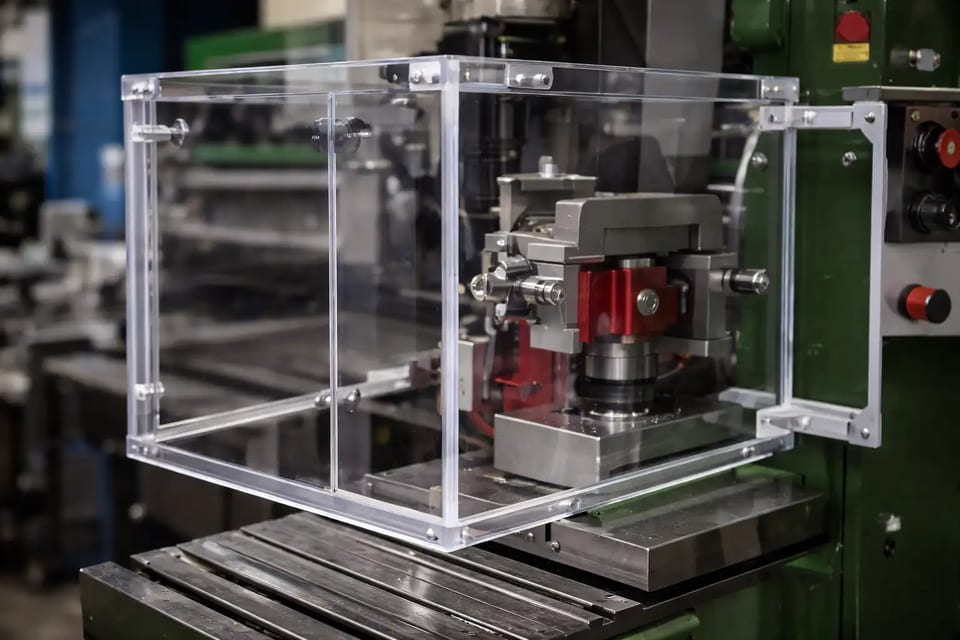
Machine Guarding in Polycarbonate and Acrylic
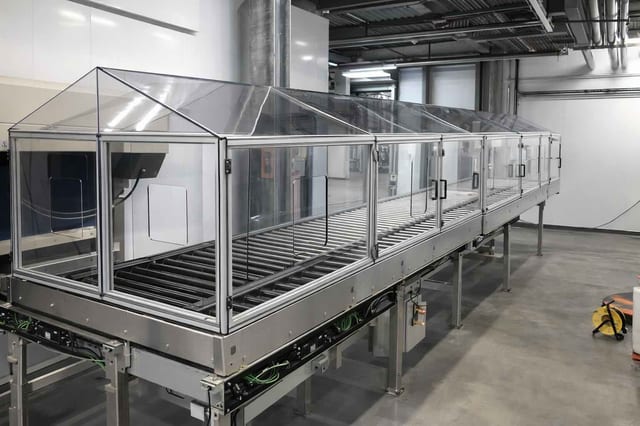
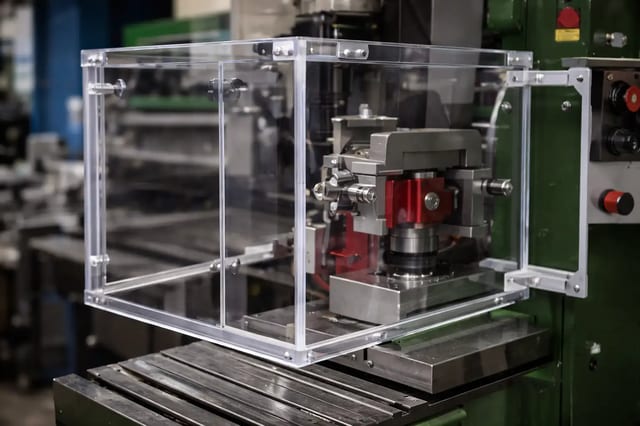
Machine guards need to do two things at once: keep operators safe from moving parts, swarf and coolant spray, and let them actually see what the machine is doing. Clear polycarbonate and acrylic guarding delivers both, replacing solid steel mesh guards where visibility matters without compromising protection.
We cut and fabricate polycarbonate and acrylic guards to size for CNC routers, lathes, mills, saws and general production machinery, including curved and folded guards where the application calls for it.
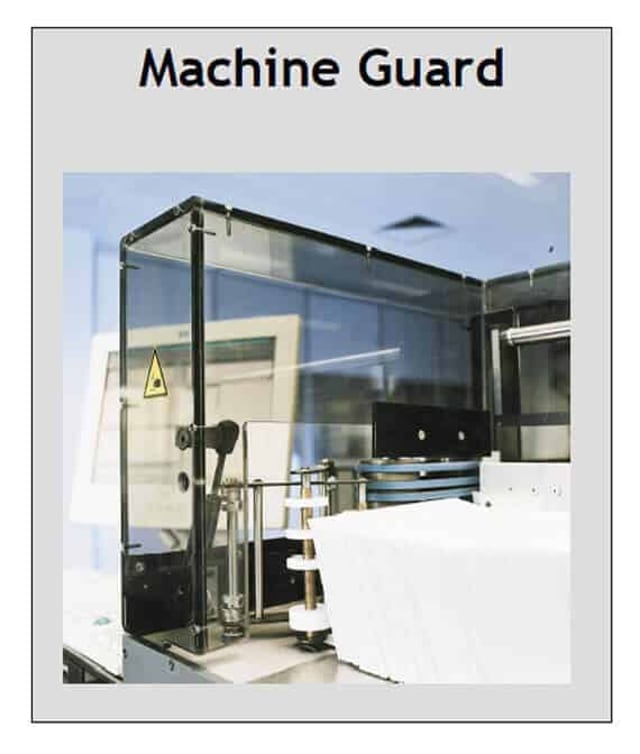
Polycarbonate vs Acrylic for Guarding Applications
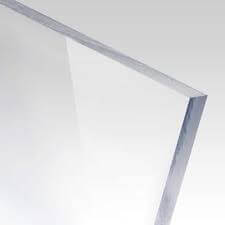
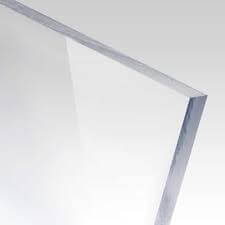
Polycarbonate is the standard for impact-rated machine guarding. It's roughly 200 times more impact-resistant than glass and significantly tougher than acrylic, making it the right choice for guards near moving cutting tools, chip ejection or anywhere impact risk is real.
Acrylic (Perspex) offers better clarity and a harder, more scratch-resistant surface than polycarbonate, and suits lower-risk viewing panels and enclosures where impact resistance is less critical but optical quality matters.
For guards in wet, corrosive or coolant-heavy environments where clarity isn't required, HDPE sheet is a durable, chemical-resistant alternative for splash guards and enclosure panels.
Visibility, Impact Resistance and Compliance
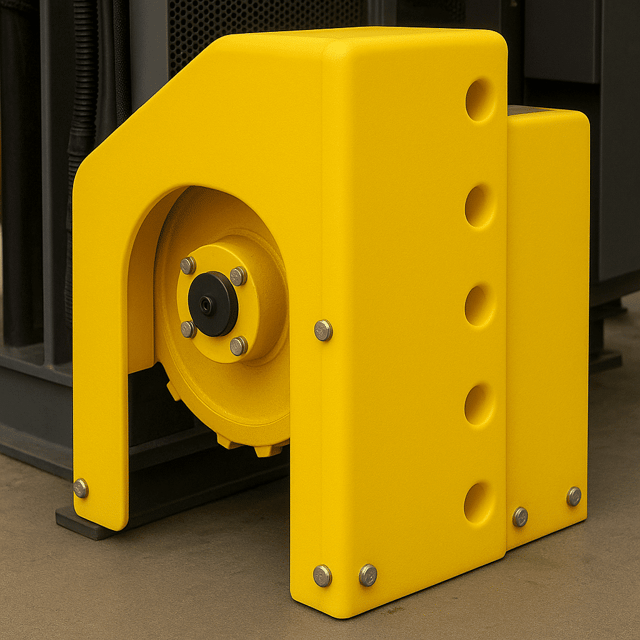
Polycarbonate guarding lets operators monitor tooling and workpiece without opening the enclosure, reducing downtime for visual checks while containing swarf, coolant and any tool breakage risk.
We can fabricate guards to suit machine guarding clearance and gap requirements. Talk to us about your specific machine and risk assessment and we'll cut panels to match.
Common Machine Guard Applications
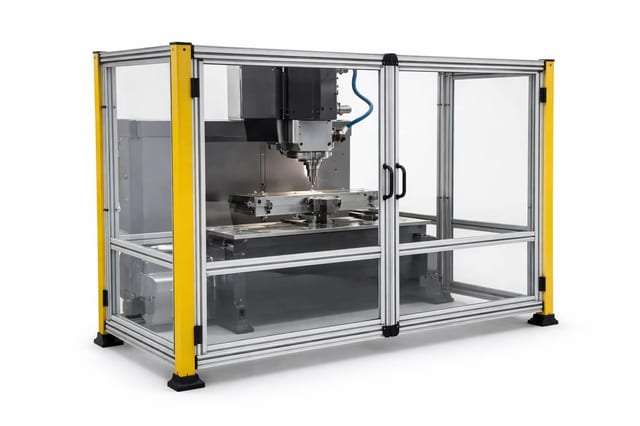
Typical guarding jobs include CNC router and mill enclosure panels, lathe chuck and tailstock guards, saw blade guards, robotic cell viewing windows, and splash guards around wash-down or coolant-heavy equipment.
We also supply guarding for retrofits where an older machine is being brought up to current safety standards, matching new panels to existing frame dimensions.
Custom Cutting and Fabrication
Guards are cut on our CNC router or laser for clean edges and accurate bolt-hole patterns, with folding and fabrication available for guards that need a return edge or box profile rather than a flat panel.
Provide machine dimensions, a sketch or the guard you're replacing and we'll quote material, thickness and fabrication.
Featured Products
Products commonly used for this application.

Services Involved
Our services relevant to this use case.


Need help with your machine guards project?
Our engineers provide expert guidance on material selection, design optimisation, and fabrication.
Machine Guards FAQ
Should I use polycarbonate or acrylic for a machine guard?
How impact-resistant is polycarbonate compared to glass?
Can you cut guards to fit an existing machine frame?
Do you fabricate folded or boxed guards, not just flat panels?
What material suits guards in wet or coolant-heavy areas?
More in Industrial Engineering and Wear Components
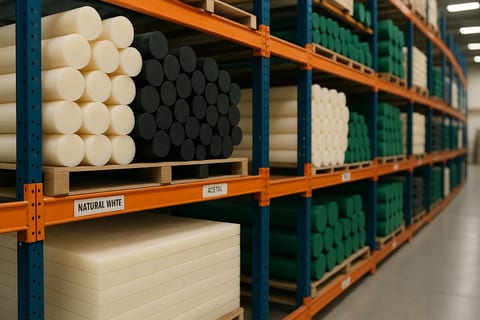
Engineering Plastic Trade Names & Equivalents
Cross-reference guide to engineering plastic trade names. Ertalon, Sustamid, Nylatron, Ertacetal, Sustarin, Polystone, Tivar, Ertalyte, and Simona matched to the nylon, acetal, UHMWPE, PET, and PVC we supply.
Read more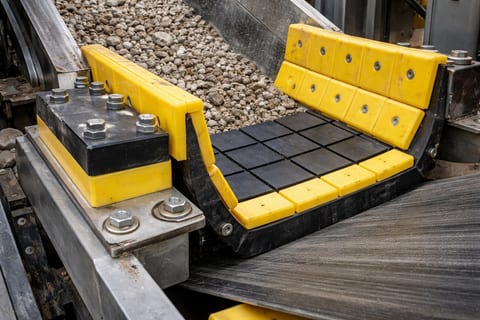
Conveyor Skirting & Transfer Point Sealing
UHMWPE and HDPE conveyor skirting boards, skirt liners, and transfer point sealing strips. Stop spillage and dust at load zones, cut to your chute and skirt dimensions.
Read more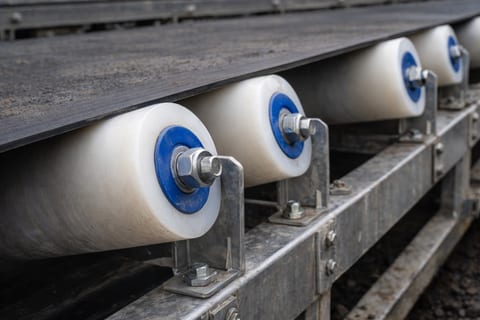
Plastic Sheaves, Pulleys & Rollers
Machined nylon and UHMWPE sheaves, rope pulleys, cable rollers, and guide wheels. Lighter than steel, kind to ropes and cables, machined to your drawing.
Read more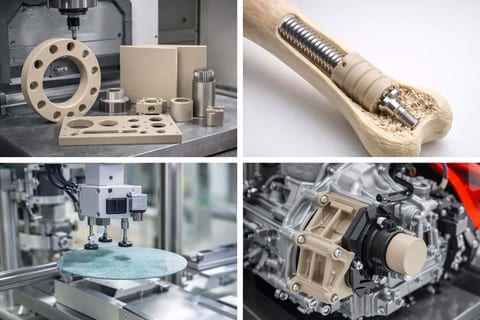
PEEK Machined Parts & Components
PEEK machined parts for extreme temperature, chemical, and wear applications. Bushes, seals, valve seats, and custom components machined from PEEK sheet and rod to your drawing.
Read more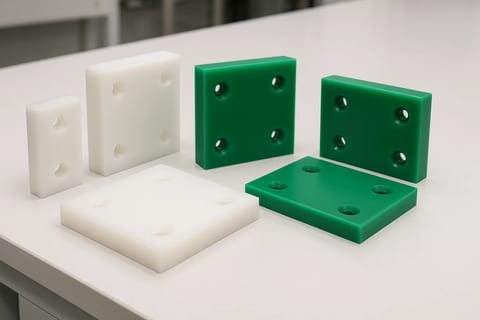
UHMWPE Wear Pads
Custom UHMWPE wear pads and slide plates engineered for chutes, conveyors and material-handling equipment. Exceptional abrasion resistance, self-lubricating properties and CNC machined to your drawings with fixing holes.
Read more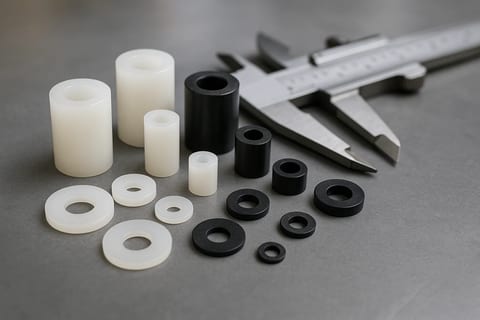
Nylon Washers, Spacers & Custom Small Parts
Nylon washers, plastic spacers, shoulder washers, and PTFE washers in standard metric sizes or machined to your spec. From one-off prototypes to production quantities, delivered Australia-wide.
Read moreRelated from other industries
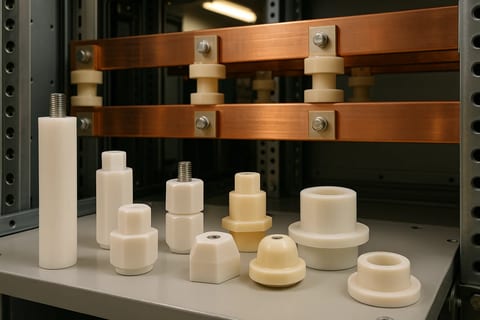
Plastic Electrical Insulators & Insulation Components
Machined plastic electrical insulators, standoffs, barriers, and busbar supports in nylon, acetal, PTFE, and polycarbonate. Cut and machined to drawing, delivered Australia-wide.
Read more
Plastic Packers, Shims & Window Packers
Window packers, horseshoe packers, glazing packers, and load-bearing plastic shims cut to any size and thickness. Trade quantities, custom sizes, and fast Australia-wide delivery.
Read more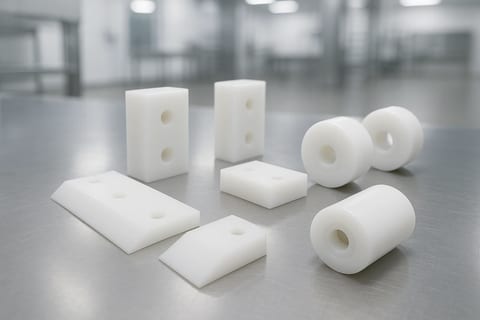
Food Processing Machine Parts & Scraper Blades
CNC-machined food-grade HDPE scraper blades, paddles, guides, and change parts for food processing equipment. Metal-detectable options, machined to drawing, delivered Australia-wide.
Read moreReady to start your machine guards project?
Join thousands of businesses across Australia who trust Perspex Online for precision-cut industrial plastics.
Guides & articles
Top 10 Ordering Mistakes With Plastic Materials (And How to Avoid Them)
Avoid common plastic ordering errors by selecting proper thickness, material type, and UV resistance; ensuring precise measurements; considering tolerances; and consulting suppliers for smooth, cost-effective projects.
Read guide →applicationsPlastic Wear Parts for Conveyor Belts: Materials, Applications, and Buying Guide
Conveyor Belts Conveyor belts fail for one simple reason: wear. Friction, abrasion, impact, moisture, and contamination slowly destroy metal components and belts, driving up downtime and maintenance costs. That is why plastic wearable parts on conveyor belts are now standard across food processing, packaging, mining, recycling, and manufacturing lines. This guide breaks down where plastic […]
Read guide →guidesThe Ultimate Guide to Choosing Cut-to-Size Plastic Sheets for Trade and DIY Projects
Guide to cut-to-size plastic sheets: choose the right material (acrylic for clarity, polycarbonate for strength), select proper thickness and finish for durability and look, and use precision cutting and custom fabrication for best results.
Read guide →fabricationFrom CAD to Cut: The Science and Technology Behind Precision Cut-to-Size Plastics
Perspex Online uses advanced CAD/CAM, CNC routing, and laser cutting technologies for precise, high-quality plastic fabrication. They offer diverse materials, eco-friendly options, instant quotes, nationwide delivery, and expert support.
Read guide →guidesTop Plastic Material Problems-and How Expert Cutting and Fabrication Prevent Them
Expert cutting and fabrication prevent common plastic issues like melting, chipping, cracking, and scratches. Precision CNC routing, laser cutting, and proper handling ensure durable, high-quality results.
Read guide →materials7 Types of Plastic and Their Resin Identification Codes (RICs)
We’re surrounded by plastic-from food containers to clothing, it is very unmistakably a part of modern life. Not all plastics are created equal, though. Knowing the various kinds of plastic and their corresponding Resin Identification Codes (RICs) is fundamental to recycling and reuse, as well as in choosing products we consume. The resins used for […]
Read guide →