
Wastewater Treatment Components: Weir Plates & Baffles
CNC-machined HDPE weir plates, baffle plates, launder covers, and clarifier components for water and wastewater treatment plants. Chemical-resistant, cut to drawing, delivered Australia-wide.
4.8 / 5
Google Rating
24hr
Quote Turnaround
Australia Wide
Delivery
Start Your Project
Partner with Australia's leading acrylic fabrication experts. We provide end-to-end support from material selection to final delivery.
Material Consultation
Our engineers help you select the optimal grade for your specific environmental and aesthetic requirements.
CAD Support
Send us your designs in DXF, DWG, or PDF. We review every file for structural integrity and precision cutting paths.
Fast Quoting
Receive a comprehensive technical specification and competitive quote within 24 hours of your submission.
Recommended Materials
Selecting the right base material for this application.
Why Treatment Plants Specify HDPE Over Steel
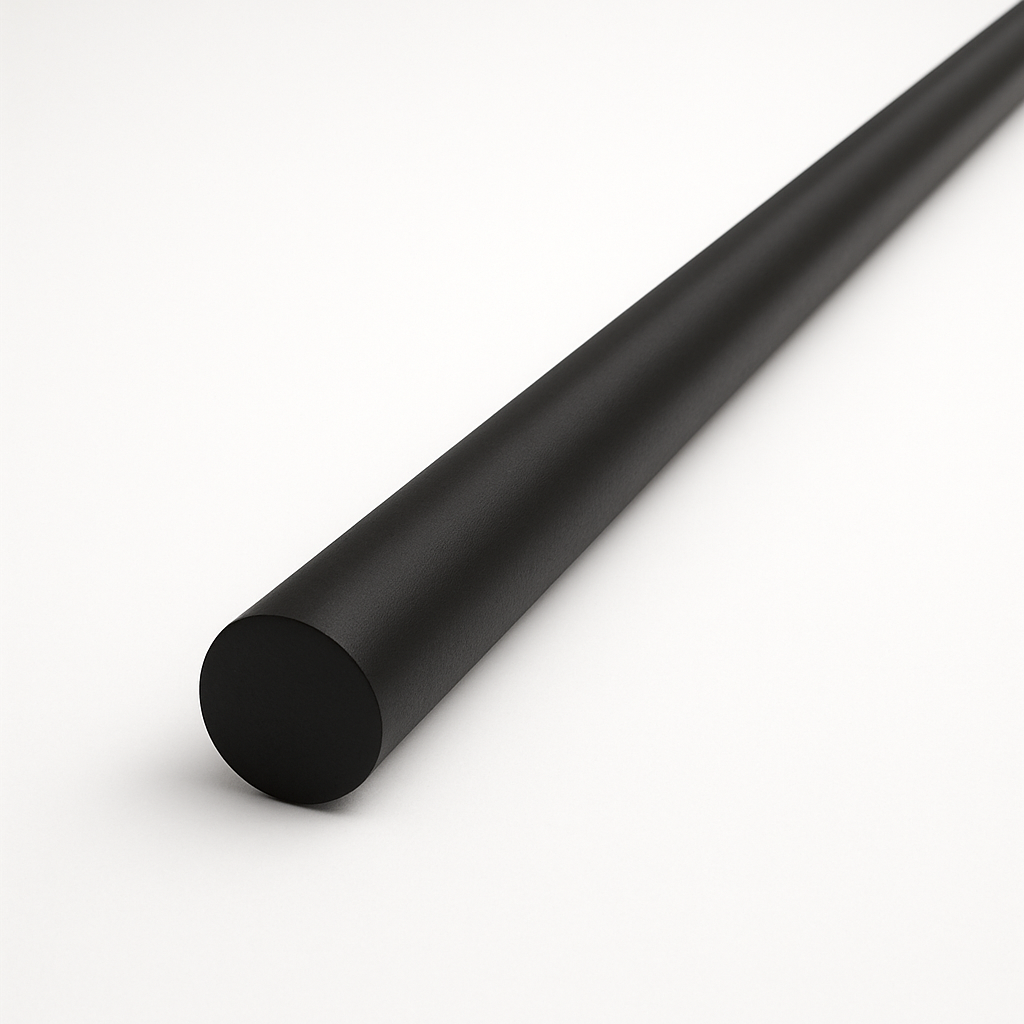
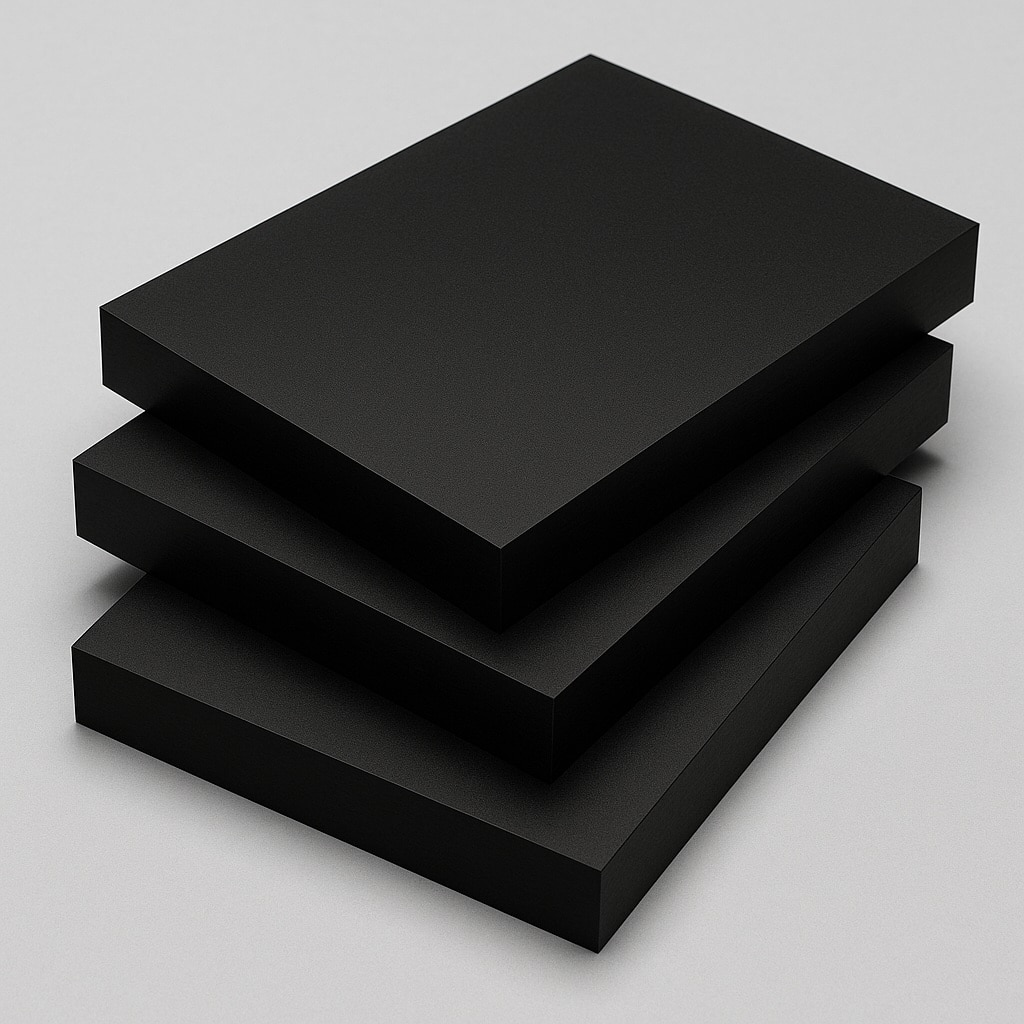
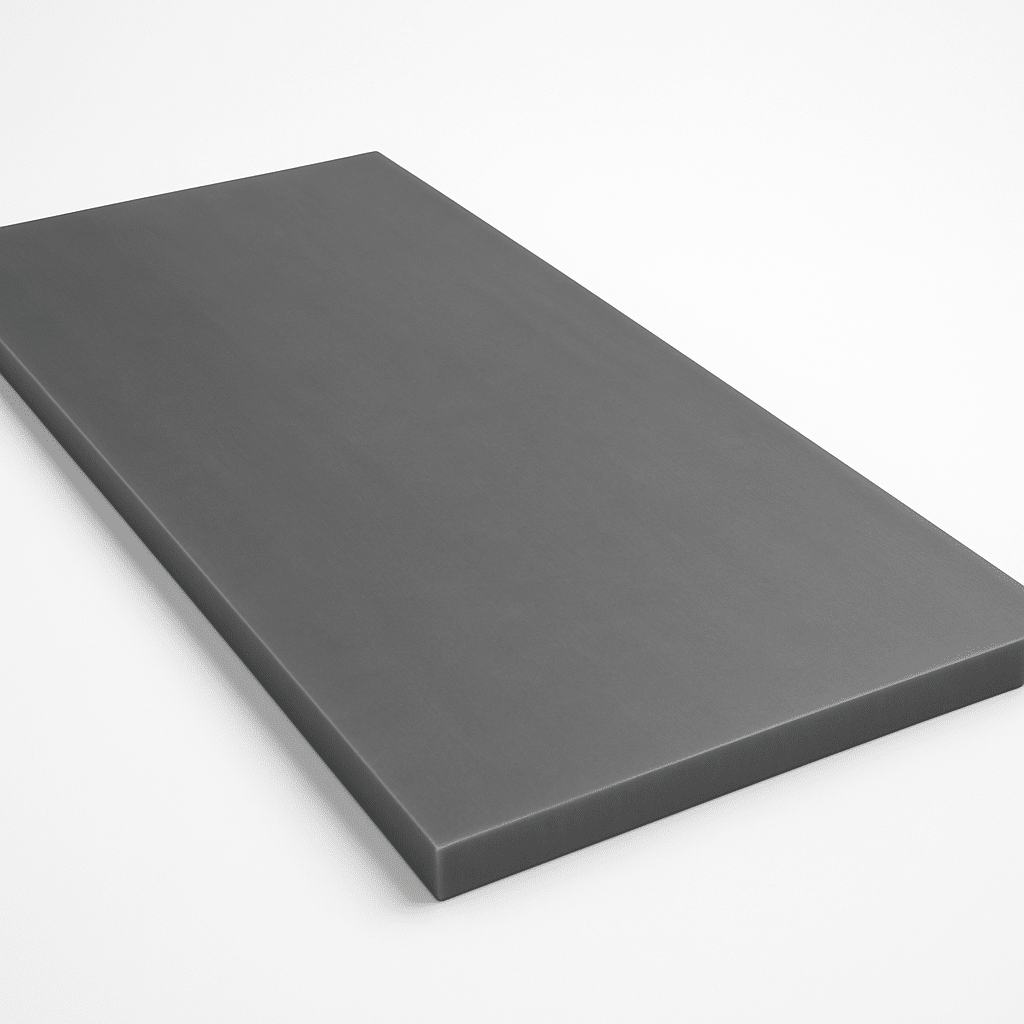
Water and wastewater treatment plants are among the most corrosive environments in civil infrastructure. Hydrogen sulphide, chlorine dosing, ferric chloride, and constant immersion destroy coated steel components within years. HDPE sheet is chemically inert to virtually everything in a treatment train, which is why weir plates, baffles, and launder components machined from HDPE routinely outlast the concrete structures they bolt to.
HDPE is also a fraction of the weight of steel, so a two-person crew can carry and fix weir plates around a clarifier ring without cranage: a genuine cost saving on plants where access is tight and confined-space permits make every lift expensive.
V-Notch Weir Plates Machined to Your Hydraulic Design
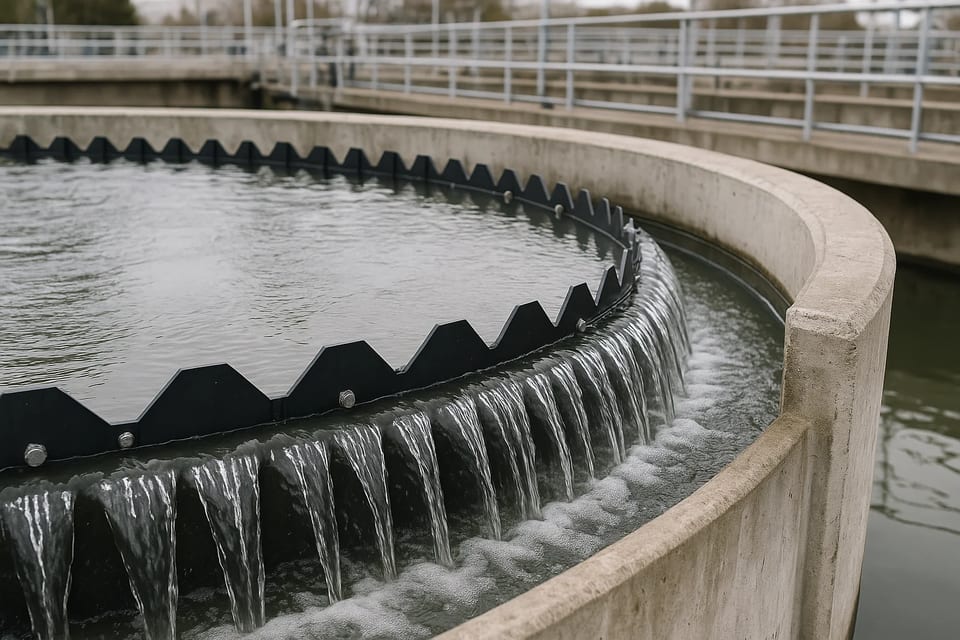
Weir plates control the discharge from clarifiers, sedimentation tanks, and aeration basins, and the notch geometry is a hydraulic design element. The V-notch angle, pitch, and depth set the flow distribution around the tank. We CNC-route V-notch, rectangular-notch, and custom weir profiles directly from your hydraulic drawings, with slotted mounting holes so the plates can be levelled precisely during commissioning.
For circular clarifiers, weir plates are supplied as segmented arcs cut to the tank radius, labelled in installation sequence so the crew works around the ring without sorting. Typical thickness is 10-12mm, with 316 stainless fixings and oversized slots to allow thermal movement.
Baffle Plates, Scum Baffles, and Stilling Baffles
Baffle plates direct flow, retain scum, and dissipate inlet energy inside clarifiers and lamella plate settlers. HDPE baffles machine cleanly to any profile: curved scum baffles following the launder ring, perforated stilling baffles for inlet zones, and under-over baffle sets for chlorine contact tanks. Because HDPE does not corrode, the baffles hold their edge geometry for decades, keeping the hydraulic performance the process engineer designed.
For high-wear positions (grit channel liners and inlet works where abrasive flow scours the surface) UHMWPE sheet gives roughly three times the abrasion life of standard HDPE and is the better choice despite the higher material cost.
Launder Covers, Pipe Supports, and Wear Shoes
Beyond weirs and baffles, treatment plants order a long list of machined HDPE components: launder covers that suppress algae growth in effluent channels, saddle-profile pipe supports that cradle HDPE and PVC pipework without point-loading it, wear shoes and guide blocks for scraper bridge mechanisms, and access hatch surrounds. All are CNC-machined from solid sheet to your dimensions, with drilled and countersunk fixing holes ready for site installation.
Where components need to be joined into assemblies (folded launder covers, welded baffle frames, or tank internals), our plastic fabrication team welds HDPE to watertight standards, so parts arrive as finished assemblies rather than kits of loose panels.
Plant Refurbishments and Council Supply
Clarifier and treatment plant refurbishments typically need the full component set replaced at once: weir plates, baffles, launder covers, and mechanism wear parts. We take off quantities from the plant GA drawings, CNC-route every component, and deliver the set labelled by position with material certificates for council and water authority documentation requirements.
Get a quote for wastewater treatment components. Send your weir or baffle drawings, or the plant GA, and we will price the full machined set with delivery to site anywhere in Australia.
Featured Products
Products commonly used for this application.
Services Involved
Our services relevant to this use case.


Need help with your wastewater treatment components: weir plates & baffles project?
Our engineers provide expert guidance on material selection, design optimisation, and fabrication.
Wastewater Treatment Components: Weir Plates & Baffles FAQ
Why is HDPE used for weir plates and baffles in wastewater treatment?
Can you cut V-notch weir plates to a hydraulic design drawing?
What thickness HDPE should be used for baffle plates in a clarifier?
Is HDPE suitable for potable water treatment plants?
Can you supply a full set of components for a clarifier refurbishment?
More in Tanks Fluid and Containment Systems
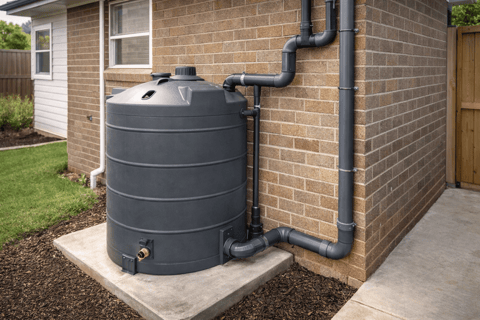
Waste & Grey Water Tanks
Plastic materials are commonly used for wastewater storage tanks because they offer corrosion resistance, chemical compatibility, and long-term durability in wet environments. Unlike metal tanks,…
Read more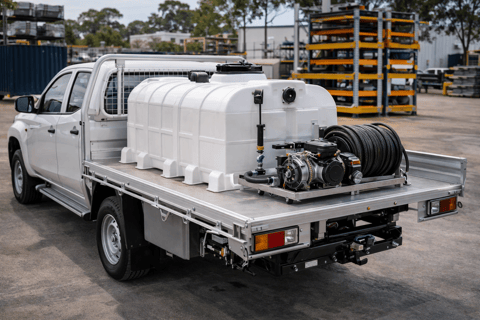
Vehicle-Mounted Plastic Tanks
Vehicle-mounted plastic tanks are used for storing water, waste, fuel, chemicals, and process fluids in utes, 4×4 vehicles, trucks, trailers, and service vehicles.
Read more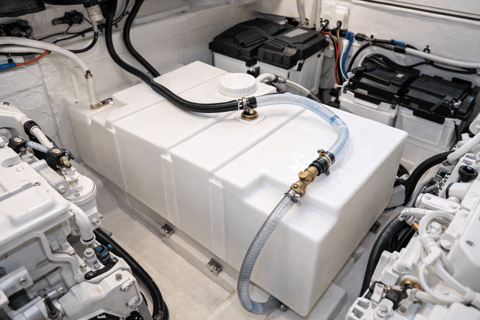
Marine Tanks
Custom-welded marine tanks in HDPE and Seaboard marine-grade plastic for boats and vessels. Baffled, fitted, and shaped to your hull cavity.
Read more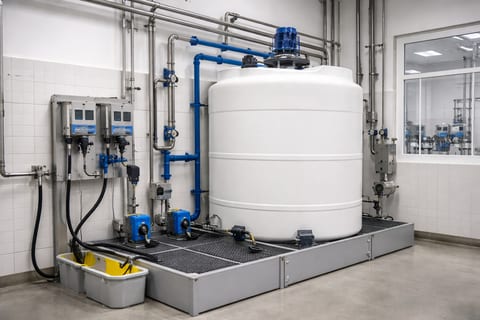
Chemical Storage Tanks
Custom-welded chemical storage tanks in HDPE, polypropylene, and PVC. Chemically resistant, bunded options available, built to spec.
Read more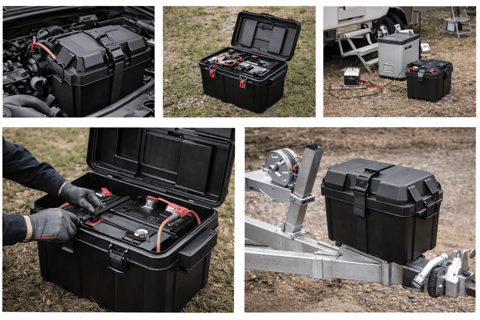
Battery Box
Plastic materials are widely used for battery boxes because they provide chemical resistance, corrosion resistance, and electrical insulation. These properties are particularly important in battery…
Read more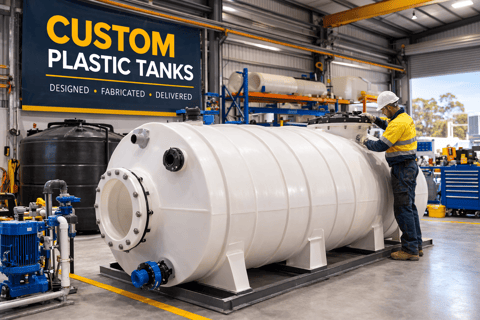
Custom Plastic Tanks
Custom-welded plastic tanks in HDPE, polypropylene, and marine-grade Seaboard. Built to your exact volume, footprint, and fitting requirements.
Read moreRelated from other industries
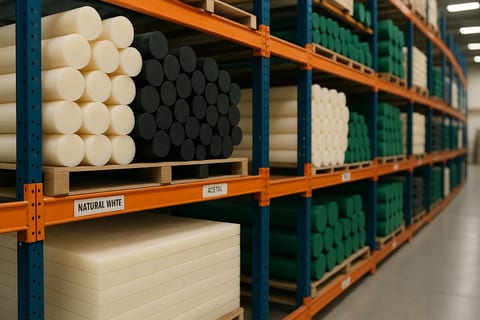
Engineering Plastic Trade Names & Equivalents
Cross-reference guide to engineering plastic trade names. Ertalon, Sustamid, Nylatron, Ertacetal, Sustarin, Polystone, Tivar, Ertalyte, and Simona matched to the nylon, acetal, UHMWPE, PET, and PVC we supply.
Read more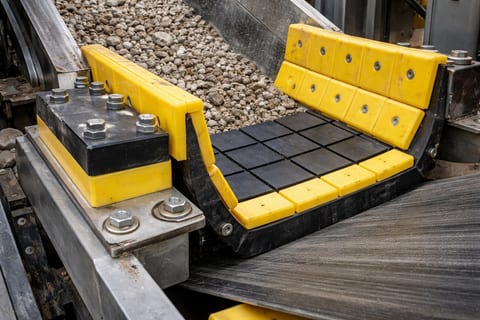
Conveyor Skirting & Transfer Point Sealing
UHMWPE and HDPE conveyor skirting boards, skirt liners, and transfer point sealing strips. Stop spillage and dust at load zones, cut to your chute and skirt dimensions.
Read more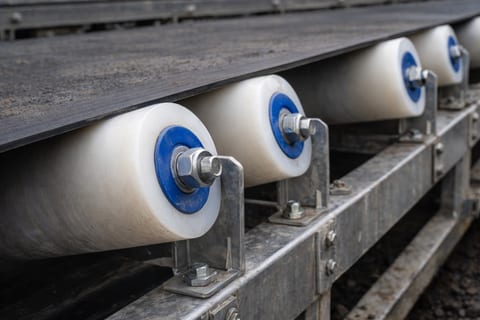
Plastic Sheaves, Pulleys & Rollers
Machined nylon and UHMWPE sheaves, rope pulleys, cable rollers, and guide wheels. Lighter than steel, kind to ropes and cables, machined to your drawing.
Read moreReady to start your wastewater treatment components: weir plates & baffles project?
Join thousands of businesses across Australia who trust Perspex Online for precision-cut industrial plastics.
Guides & articles
Top 10 Ordering Mistakes With Plastic Materials (And How to Avoid Them)
Avoid common plastic ordering errors by selecting proper thickness, material type, and UV resistance; ensuring precise measurements; considering tolerances; and consulting suppliers for smooth, cost-effective projects.
Read guide →applicationsPlastic Wear Parts for Conveyor Belts: Materials, Applications, and Buying Guide
Conveyor Belts Conveyor belts fail for one simple reason: wear. Friction, abrasion, impact, moisture, and contamination slowly destroy metal components and belts, driving up downtime and maintenance costs. That is why plastic wearable parts on conveyor belts are now standard across food processing, packaging, mining, recycling, and manufacturing lines. This guide breaks down where plastic […]
Read guide →guidesThe Ultimate Guide to Choosing Cut-to-Size Plastic Sheets for Trade and DIY Projects
Guide to cut-to-size plastic sheets: choose the right material (acrylic for clarity, polycarbonate for strength), select proper thickness and finish for durability and look, and use precision cutting and custom fabrication for best results.
Read guide →materials7 Types of Plastic and Their Resin Identification Codes (RICs)
We’re surrounded by plastic-from food containers to clothing, it is very unmistakably a part of modern life. Not all plastics are created equal, though. Knowing the various kinds of plastic and their corresponding Resin Identification Codes (RICs) is fundamental to recycling and reuse, as well as in choosing products we consume. The resins used for […]
Read guide →fabricationTips for Cutting, Shaping, and Working with Plastic Materials
Plastic is a versatile material used for various projects, starting from simple crafts and up to the more complicated engineering designs. However, plastic can be very tricky if you do not know the proper ways of using it. Here are some tips in cutting, shaping, and working with plastic materials effectively: Choosing the Right Tools […]
Read guide →latest newsHistory of Australian Care
From the moment we wake up to the time we go to bed, we are surrounded by plastic products. It is hard to imagine a world without plastic, as it has become so ubiquitous. The convenience and versatility of plastic have made it a popular material in every industry. However, with every passing day, the […]
Read guide →