

PEEK Machined Parts & Components
PEEK machined parts for extreme temperature, chemical, and wear applications. Bushes, seals, valve seats, and custom components machined from PEEK sheet and rod to your drawing.
4.8 / 5
Google Rating
24hr
Quote Turnaround
Australia Wide
Delivery
Start Your Project
Partner with Australia's leading acrylic fabrication experts. We provide end-to-end support from material selection to final delivery.
Material Consultation
Our engineers help you select the optimal grade for your specific environmental and aesthetic requirements.
CAD Support
Send us your designs in DXF, DWG, or PDF. We review every file for structural integrity and precision cutting paths.
Fast Quoting
Receive a comprehensive technical specification and competitive quote within 24 hours of your submission.
Recommended Materials
Selecting the right base material for this application.
The Plastic That Replaces Metal
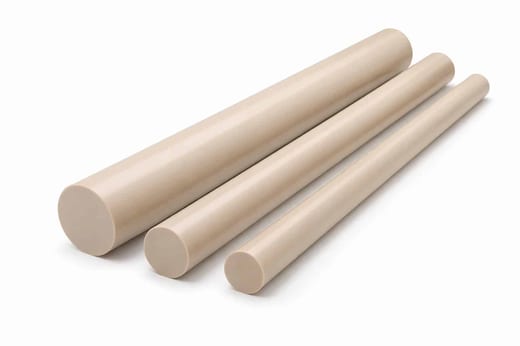
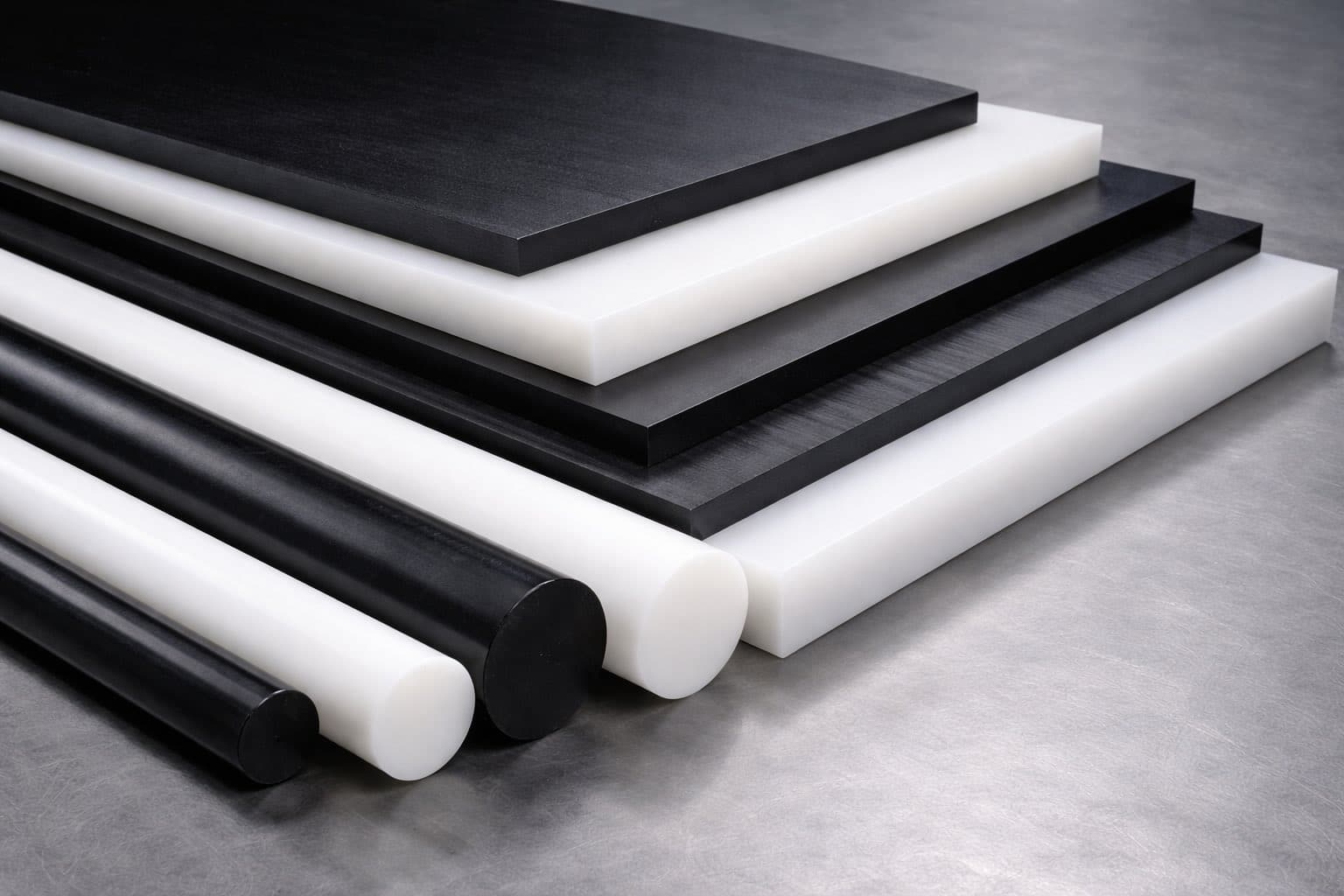
PEEK sits at the top of the engineering plastics pyramid: continuous service at 250 degrees Celsius, near-universal chemical resistance, and mechanical strength that lets it replace bronze, stainless, and aluminium components at a fraction of the weight. We stock PEEK sheet and PEEK rod and machine finished components to your drawing.
Where PEEK Earns Its Price
PEEK is expensive per kilogram and cheap per problem solved. A PEEK valve seat survives steam service that destroys acetal in days. A PEEK bush runs dry at temperatures that cook nylon. A PEEK wear ring in a process pump outlasts bronze while never galling the shaft. When downtime costs thousands per hour, the material price of a small machined part disappears into the arithmetic.
Common PEEK Components We Machine
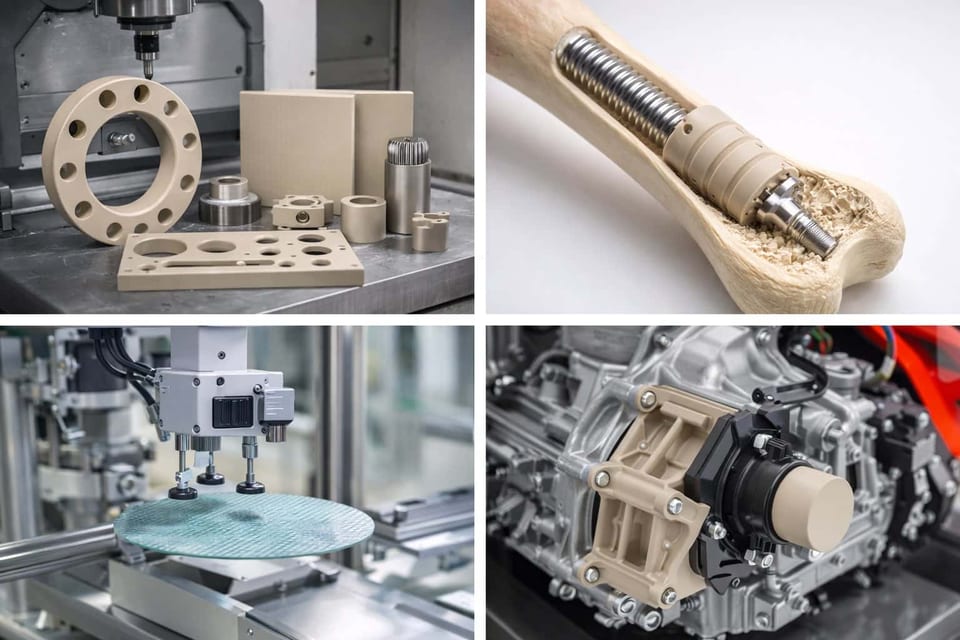
Valve seats and stem seals for hot and chemical service, pump wear rings and bushes, high-temperature spacers and washers, insulating components for electrical equipment running hot, semiconductor and laboratory handling parts, and food machine components that face repeated steam sterilisation. All machined on the CNC lathe and router from certified stock.
PEEK vs PTFE vs Acetal
PTFE beats PEEK on pure chemical inertness and friction but is soft and creeps under load. Acetal machines economically and holds precision but tops out around 100 degrees. PEEK combines most of PTFE's resistance with genuine structural strength and 250 degree service. The practical rule: try acetal first, step up to PTFE for chemicals and low-load seals, and specify PEEK when heat and load arrive together.
Industries Running on PEEK
Oil and gas specify PEEK for downhole seals and connectors. Food and beverage plants use it for hot-fill and sterilisation-cycle components. Chemical processors line pumps and valves with it. Electronics manufacturers rely on its dielectric strength at temperature. Mining and mineral processing use PEEK bushes where slurry, heat, and load meet.
One-Offs, Repairs, and Production Batches
Breakdown part with no drawing? Send the worn component and we will reverse-engineer it in PEEK, often upgrading the original material in the process. For OEMs we machine production batches with consistent tolerances and keep programs on file for repeat orders.
Stock Shapes for Your Own Workshop
Machining in-house? We supply PEEK rod and sheet cut to workable blanks, so you buy the size you need rather than a full stock length of the most expensive plastic in the workshop.
If your drawing names a brand rather than a polymer, our engineering plastic trade names guide cross-references Ertalon, Sustamid, Polystone, and the rest to the materials we stock.
Get a quote for PEEK machined parts or stock shapes. Send your drawing or sample and we will confirm material grade and price same day.
Featured Products
Products commonly used for this application.
Services Involved
Our services relevant to this use case.


Need help with your peek machined parts & components project?
Our engineers provide expert guidance on material selection, design optimisation, and fabrication.
PEEK Machined Parts & Components FAQ
What is PEEK material?
What is PEEK used for?
Why is PEEK so expensive?
Can you machine PEEK to tight tolerances?
When should I use PEEK instead of PTFE or acetal?
More in Industrial Engineering and Wear Components
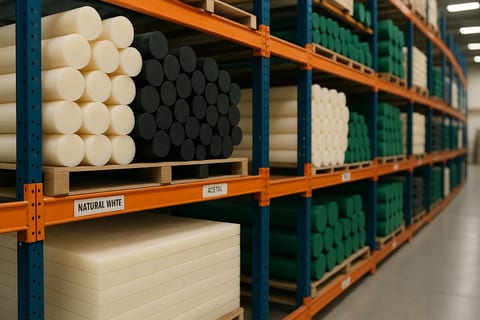
Engineering Plastic Trade Names & Equivalents
Cross-reference guide to engineering plastic trade names. Ertalon, Sustamid, Nylatron, Ertacetal, Sustarin, Polystone, Tivar, Ertalyte, and Simona matched to the nylon, acetal, UHMWPE, PET, and PVC we supply.
Read more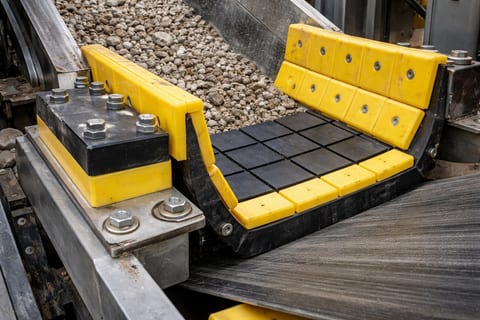
Conveyor Skirting & Transfer Point Sealing
UHMWPE and HDPE conveyor skirting boards, skirt liners, and transfer point sealing strips. Stop spillage and dust at load zones, cut to your chute and skirt dimensions.
Read more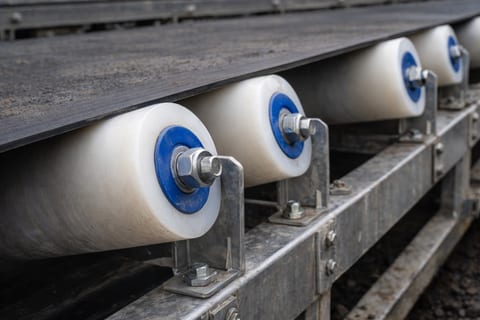
Plastic Sheaves, Pulleys & Rollers
Machined nylon and UHMWPE sheaves, rope pulleys, cable rollers, and guide wheels. Lighter than steel, kind to ropes and cables, machined to your drawing.
Read more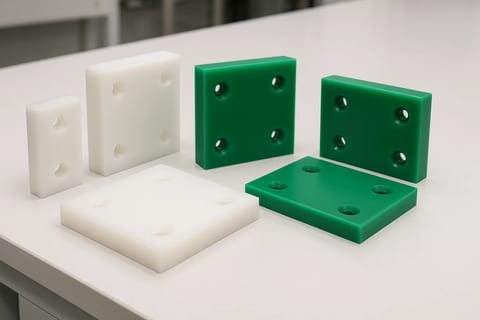
UHMWPE Wear Pads
Custom UHMWPE wear pads and slide plates engineered for chutes, conveyors and material-handling equipment. Exceptional abrasion resistance, self-lubricating properties and CNC machined to your drawings with fixing holes.
Read more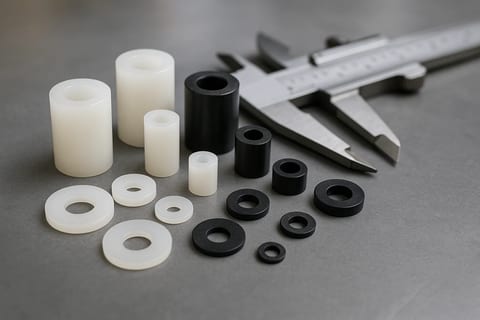
Nylon Washers, Spacers & Custom Small Parts
Nylon washers, plastic spacers, shoulder washers, and PTFE washers in standard metric sizes or machined to your spec. From one-off prototypes to production quantities, delivered Australia-wide.
Read more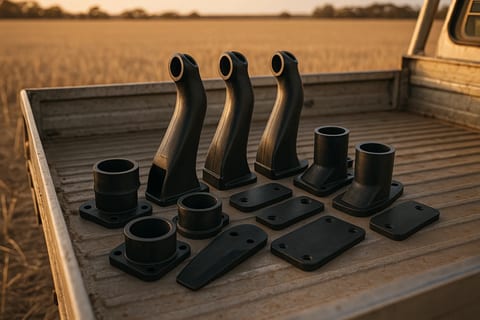
Agricultural Machinery Parts & Feed Trough Liners
CNC-machined HDPE and UHMWPE parts for farm machinery: seeder and harvester wear parts, auger flighting, chute liners, and poly feed trough liners. Machined to drawing, delivered Australia-wide.
Read moreReady to start your peek machined parts & components project?
Join thousands of businesses across Australia who trust Perspex Online for precision-cut industrial plastics.