

Chute & Hopper Liners for Mining
UHMWPE and HDPE chute liners, hopper liners, and bin liners for mining and quarry operations. Reduce carry-back, cut downtime, and extend equipment life.
4.8 / 5
Google Rating
24hr
Quote Turnaround
Australia Wide
Delivery
Start Your Project
Partner with Australia's leading acrylic fabrication experts. We provide end-to-end support from material selection to final delivery.
Material Consultation
Our engineers help you select the optimal grade for your specific environmental and aesthetic requirements.
CAD Support
Send us your designs in DXF, DWG, or PDF. We review every file for structural integrity and precision cutting paths.
Fast Quoting
Receive a comprehensive technical specification and competitive quote within 24 hours of your submission.
Recommended Materials
Selecting the right base material for this application.
Why Mining Operations Switch from Steel to Plastic Chute Liners
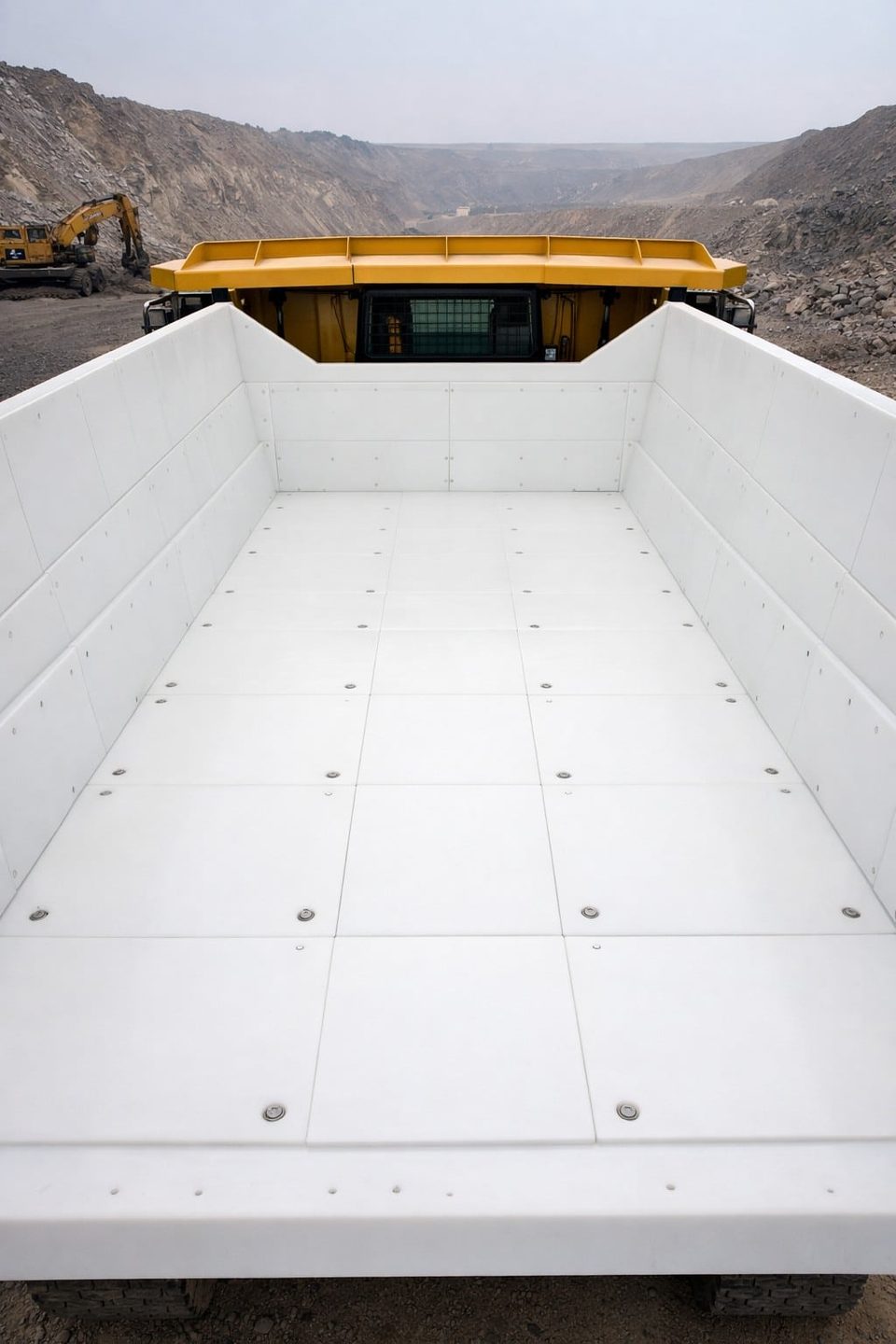
Steel chute liners wear through, build up carry-back, and need a crane and a crew to replace. UHMWPE sheet solves all three problems. It outlasts mild steel by a factor of 2-5x in abrasive service, its low friction surface sheds wet and sticky material instead of letting it build up, and it is light enough for two people to carry and bolt in without a crane.
Carry-back (the material that sticks to the belt and falls off on the return run) is one of the most persistent maintenance headaches on any conveyor circuit. UHMWPE-lined chutes and deflectors dramatically reduce carry-back because the surface is too slick for wet fines, coal, and clay to adhere to.
UHMWPE vs HDPE: Choosing the Right Grade
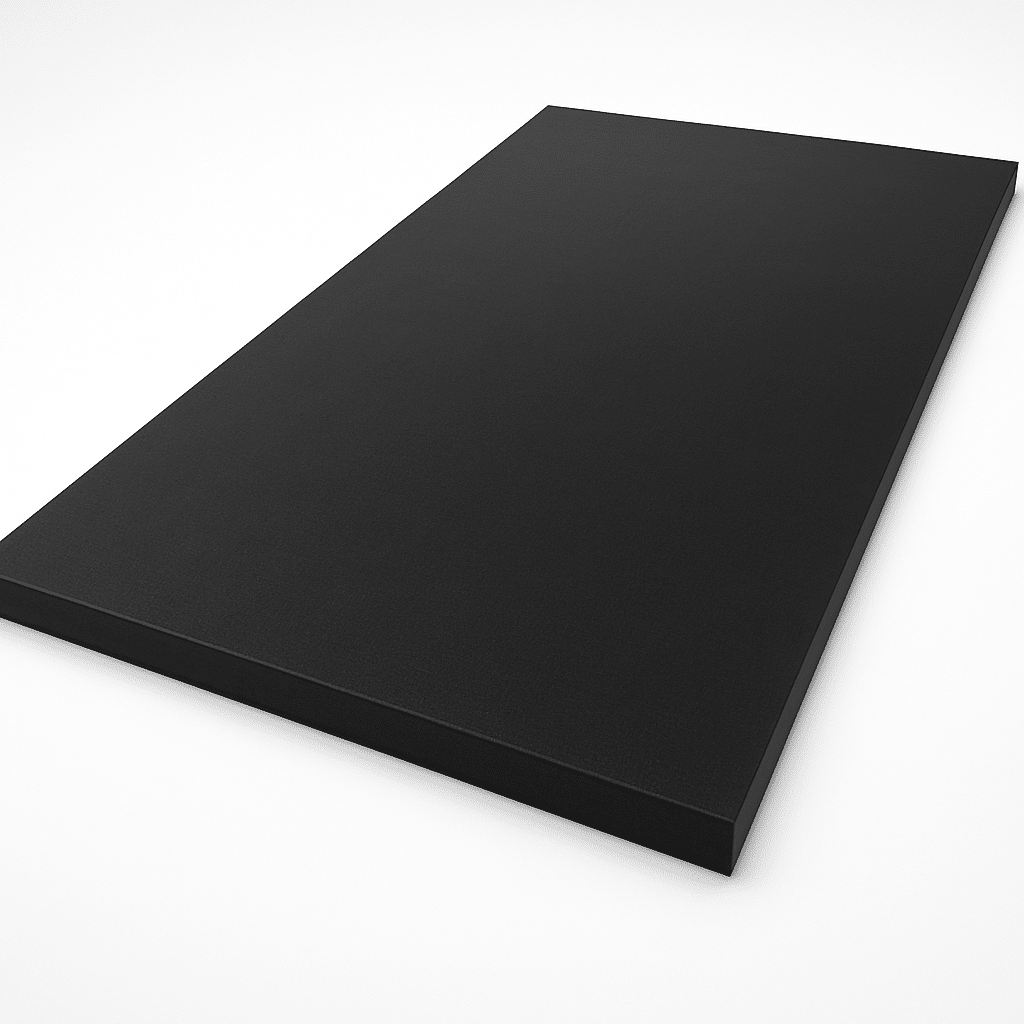
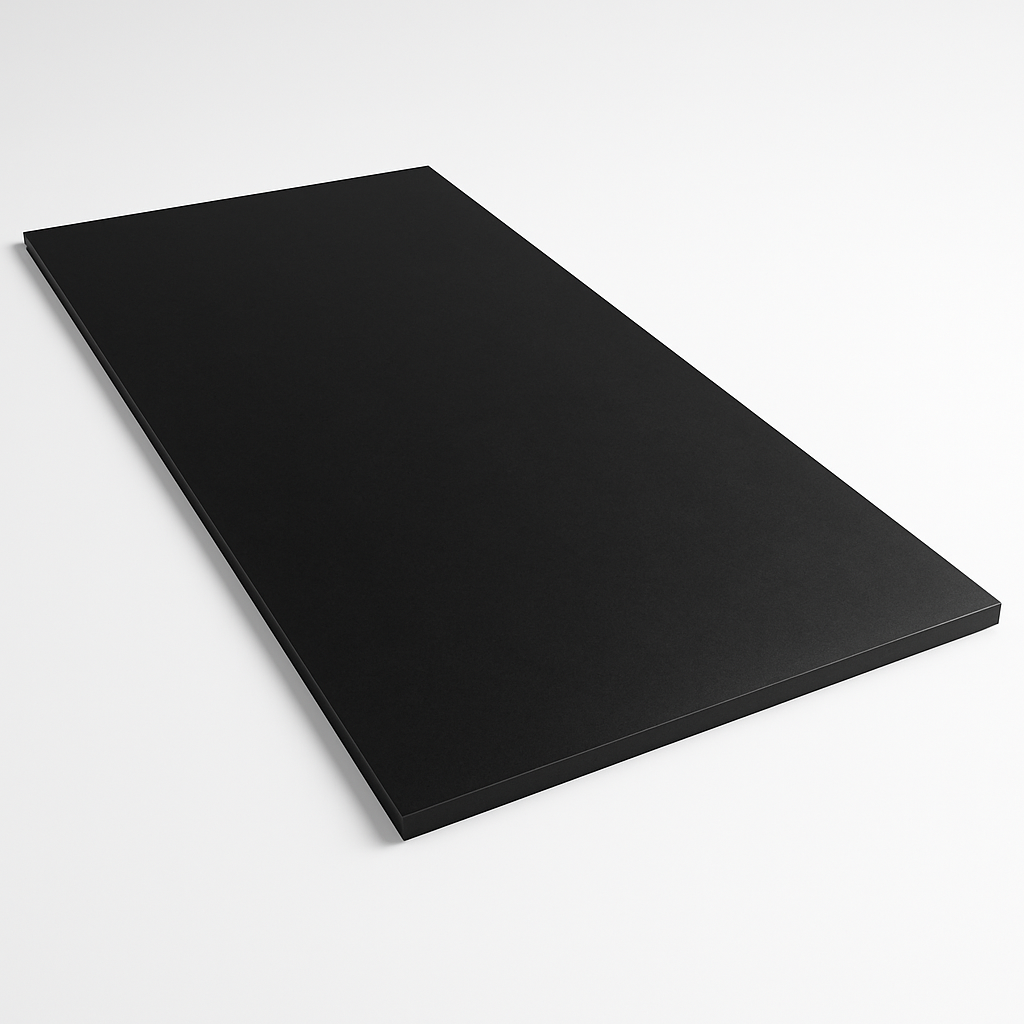
UHMWPE is the premium liner material for high-wear zones: transfer chute floors, impact plates below drop points, and the lower walls of hoppers that cop the brunt of material flow. Its molecular weight gives it roughly three times the abrasion resistance of standard HDPE sheet and a lower coefficient of friction, so material slides more freely and the liner lasts longer.
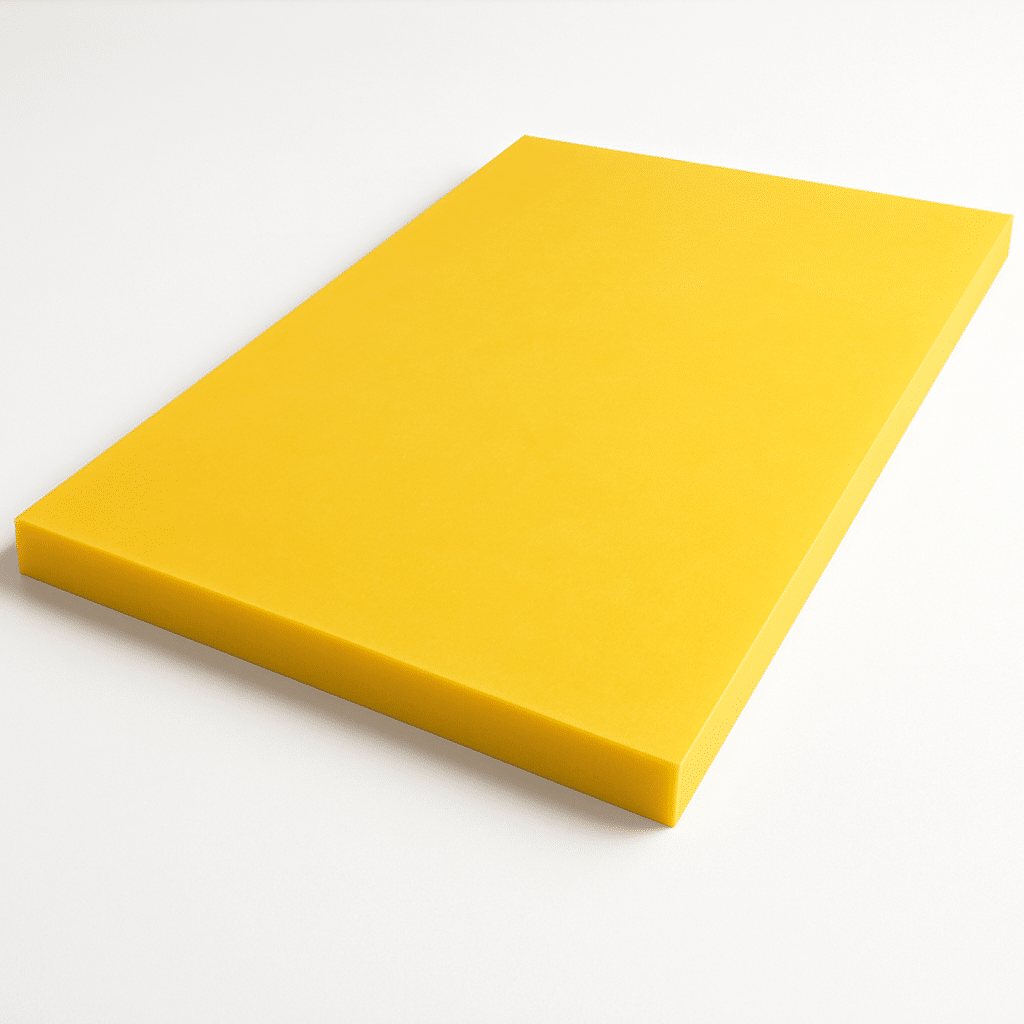
Standard HDPE is the cost-effective choice for moderate-wear areas: upper hopper walls, bin sides, and deflector plates where the material flow is less aggressive. For high-visibility applications or sites that colour-code by zone, yellow mining-spec HDPE combines wear resistance with UV-stable colour that does not fade.
Transfer Chutes, Hoppers, and Bins
Transfer chutes are the highest-wear point on any conveyor circuit. Material hits the liner at speed and under load, and fines and moisture turn the surface into a grinding paste. We supply UHMWPE chute liners in thicknesses from 10mm to 20mm, cut to your chute geometry with countersunk bolt holes so fixings sit flush and material flows over them without catching.
Hopper liners prevent hang-up and ratholing in storage bins. The low-friction UHMWPE surface lets material flow under gravity rather than bridging across the bin walls. For ROM (run-of-mine) bins with coarse lumpy feed, we use thicker panels with staggered bolt patterns to absorb impact loads without cracking.
Carry-Back Prevention
Carry-back costs more than most sites realise: belt damage, idler seizure, spillage clean-up, and the labour to scrape chutes on every shift. Lining the discharge chute and skirting zone with UHMWPE eliminates most of the build-up that causes carry-back. The material hits the liner, slides to the belt, and the return side of the chute stays clean because nothing sticks to the surface.
Cut to Your Chute Geometry
Every liner panel is CNC routed from your drawing: tapered panels, angled cuts, slotted holes for adjustment, and countersunk fixings are all standard. For chute rebuilds where no drawing exists, send us site measurements or a cardboard template and we will cut the panels to match.
Panels are labelled by position and packed in installation sequence so the crew can work through the set systematically during a shutdown. Volume pricing applies to full chute liner sets. Send us the chute GA drawing for a competitive quote.
Liner tenders often specify PE1000 or premium anti-caking grades such as Polystone Matrox by name. We supply UHMWPE to the PE1000 specification and can source named grades, and our engineering plastic trade names guide covers the rest of the brand names.
Get a quote for chute and hopper liners. Send your chute geometry or existing liner dimensions and we will price a full replacement set with volume rates.
Featured Products
Products commonly used for this application.

Services Involved
Our services relevant to this use case.


Need help with your chute & hopper liners for mining project?
Our engineers provide expert guidance on material selection, design optimisation, and fabrication.
Chute & Hopper Liners for Mining FAQ
What is the difference between UHMWPE and HDPE for chute liners?
How thick should chute liners be for mining?
Do UHMWPE liners reduce carry-back on conveyor chutes?
Can you supply liners with countersunk bolt holes?
How long do UHMWPE chute liners last in mining service?
More in Mining & Resources
Walkway & Platform Panels for Mining
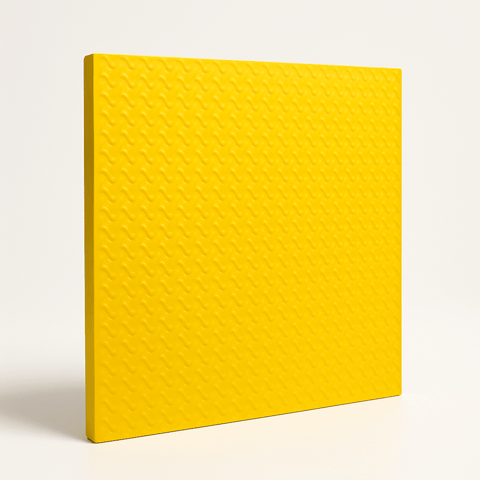
HDPE checker plate, anti-slip UHMWPE, and yellow mining-spec safety panels for mine-site walkways, platforms, ramps, and access areas. Cut to size with mounting holes.
Read more
Blast-Resistant Glazing & Protection Panels
Thick polycarbonate blast-resistant panels for mining control rooms, operator cabins, and exclusion zone barriers. Impact-rated, cut to size with bolt holes.
Read more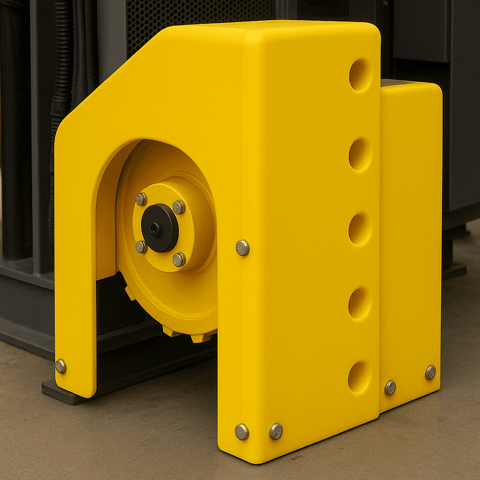
Mining Machine Guards & Safety Screens
Heavy-duty polycarbonate and HDPE machine guards for mining equipment, crushers, conveyors, and processing plants. Impact-resistant, cut to size, and delivered Australia-wide.
Read more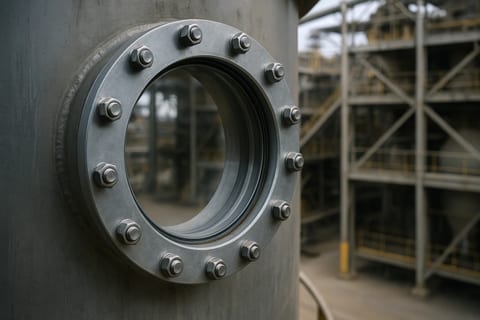
Sight Glasses & Inspection Windows
Clear polycarbonate and acrylic sight glasses for tanks, hoppers, pipelines, and process equipment. Impact-resistant, cut to size with drill holes for bolted flanges.
Read moreRelated from other industries
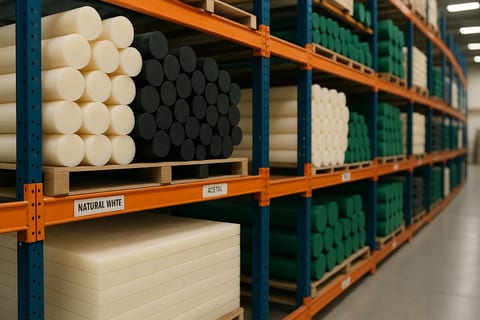
Engineering Plastic Trade Names & Equivalents
Cross-reference guide to engineering plastic trade names. Ertalon, Sustamid, Nylatron, Ertacetal, Sustarin, Polystone, Tivar, Ertalyte, and Simona matched to the nylon, acetal, UHMWPE, PET, and PVC we supply.
Read more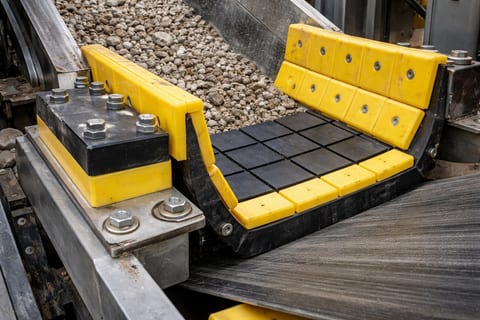
Conveyor Skirting & Transfer Point Sealing
UHMWPE and HDPE conveyor skirting boards, skirt liners, and transfer point sealing strips. Stop spillage and dust at load zones, cut to your chute and skirt dimensions.
Read more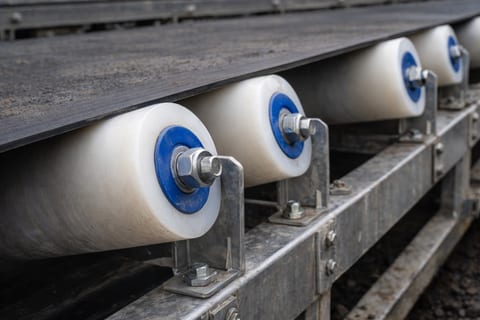
Plastic Sheaves, Pulleys & Rollers
Machined nylon and UHMWPE sheaves, rope pulleys, cable rollers, and guide wheels. Lighter than steel, kind to ropes and cables, machined to your drawing.
Read moreReady to start your chute & hopper liners for mining project?
Join thousands of businesses across Australia who trust Perspex Online for precision-cut industrial plastics.
Guides & articles
Top 10 Ordering Mistakes With Plastic Materials (And How to Avoid Them)
Avoid common plastic ordering errors by selecting proper thickness, material type, and UV resistance; ensuring precise measurements; considering tolerances; and consulting suppliers for smooth, cost-effective projects.
Read guide →applicationsPlastic Wear Parts for Conveyor Belts: Materials, Applications, and Buying Guide
Conveyor Belts Conveyor belts fail for one simple reason: wear. Friction, abrasion, impact, moisture, and contamination slowly destroy metal components and belts, driving up downtime and maintenance costs. That is why plastic wearable parts on conveyor belts are now standard across food processing, packaging, mining, recycling, and manufacturing lines. This guide breaks down where plastic […]
Read guide →guidesThe Ultimate Guide to Choosing Cut-to-Size Plastic Sheets for Trade and DIY Projects
Guide to cut-to-size plastic sheets: choose the right material (acrylic for clarity, polycarbonate for strength), select proper thickness and finish for durability and look, and use precision cutting and custom fabrication for best results.
Read guide →materials7 Types of Plastic and Their Resin Identification Codes (RICs)
We’re surrounded by plastic-from food containers to clothing, it is very unmistakably a part of modern life. Not all plastics are created equal, though. Knowing the various kinds of plastic and their corresponding Resin Identification Codes (RICs) is fundamental to recycling and reuse, as well as in choosing products we consume. The resins used for […]
Read guide →fabricationTips for Cutting, Shaping, and Working with Plastic Materials
Plastic is a versatile material used for various projects, starting from simple crafts and up to the more complicated engineering designs. However, plastic can be very tricky if you do not know the proper ways of using it. Here are some tips in cutting, shaping, and working with plastic materials effectively: Choosing the Right Tools […]
Read guide →latest newsHistory of Australian Care
From the moment we wake up to the time we go to bed, we are surrounded by plastic products. It is hard to imagine a world without plastic, as it has become so ubiquitous. The convenience and versatility of plastic have made it a popular material in every industry. However, with every passing day, the […]
Read guide →